DUBAI PROPERTY · PRACTICAL GUIDES
Property Development Participation in Dubai: A Practical Guide

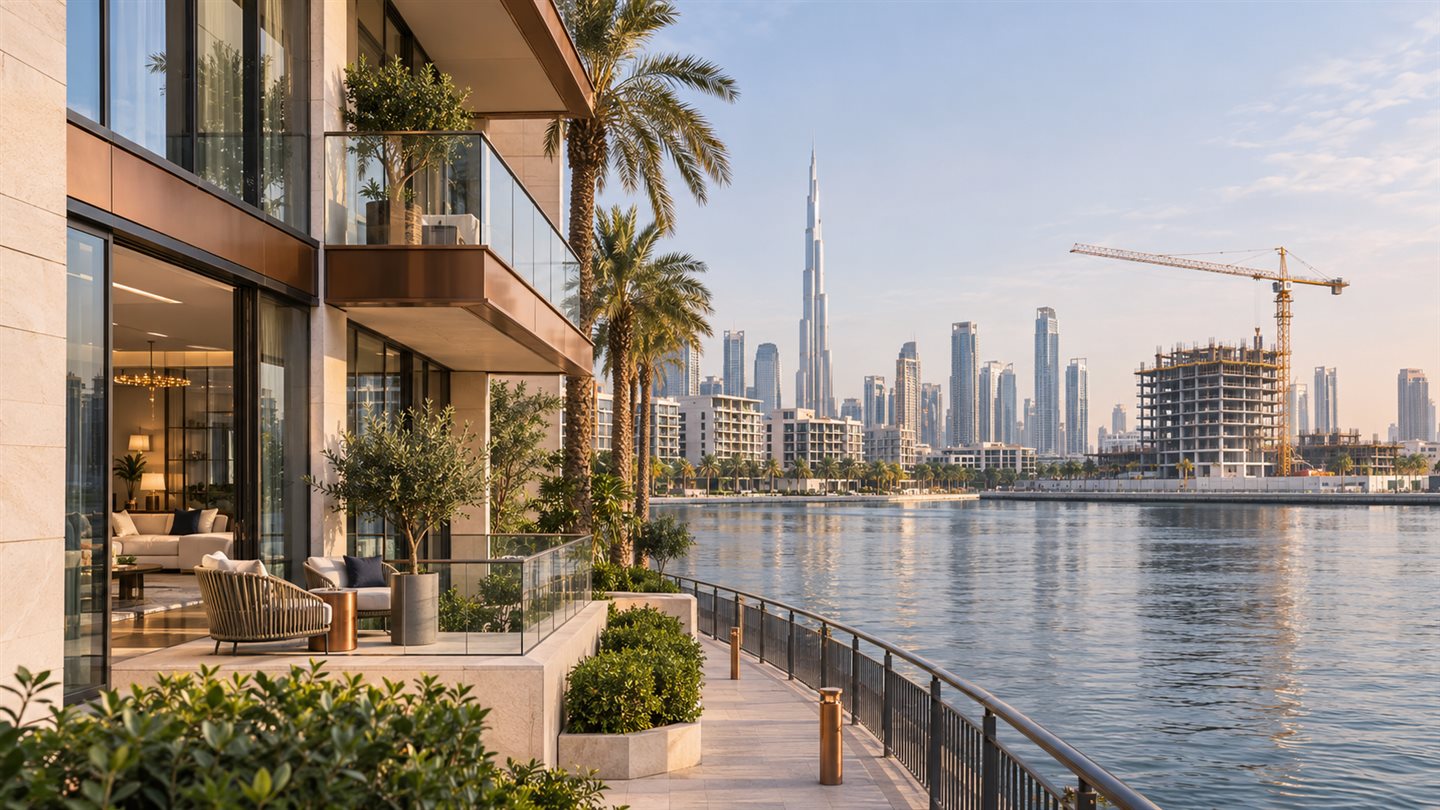
Illustrative image created for this guide.
THE QUICK ANSWER
Property development participation in Dubai is an investment in an identified development arrangement, not automatically ownership of an apartment. Evaluate the legal instrument, project evidence, payment route, funding obligations, fees and exit mechanism before assessing forecast returns. Structures and permissions vary: obtain project-specific documents and independent legal, financial and technical advice.
Key takeaways
- Identify the exact instrument and legal counterparty before comparing projected profits.
- A registered project, commercial licence and regulated investment product are different checks.
- Model delays, cost overruns, capital calls and losses as well as the proposed base case.
- Read cash-distribution priorities and transfer conditions; a target date does not create liquidity.
- Landowner joint ventures need clear valuation, development obligations and control provisions.
What is property development participation in Dubai?
Property development participation in Dubai means committing capital, land or other agreed resources to a development arrangement in return for contractual or ownership rights in that arrangement. The expression describes a commercial idea, not a single legal product. Before evaluating a return illustration, identify exactly what instrument you would receive, who issues it and which assets support it.
A participant might acquire an interest in a project company, enter a profit-sharing agreement, provide financing or join a landowner joint venture. These possibilities have different consequences. A share certificate, loan agreement and apartment purchase contract cannot be treated as interchangeable evidence of ownership. A marketing phrase such as “property-backed” does not answer whether you hold registered security, an unsecured claim or a residual interest after other creditors.
Start by drawing a one-page ownership map. Put the landholding entity at the centre, then add the developer, construction contractor, lenders, sales agent and investor vehicle. Record each legal name, registration jurisdiction and contractual relationship. If the entity receiving your money is different from the entity owning the land, ask how your rights connect them.
This guide supplies a framework for questions rather than an assessment of any offer. Compare this route with the other alternatives to off-plan property on the site. The useful first decision is whether you want an asset you can occupy or a financial exposure that depends on a project's execution and agreement.
How is participation different from buying an apartment?
Buying a particular apartment centres the transaction on an identified property and the rights attached to its purchase and registration. Participating in a development centres the transaction on a business arrangement. A participant may have no right to choose, occupy or receive any individual unit, even if the venture eventually builds residential apartments.
| Question | Apartment purchase | Development participation |
|---|---|---|
| What is identified? | A specific unit and purchase terms | An instrument, project or participation agreement |
| How may money be earned? | Rent or a later sale, after costs | Distributions or repayment under agreed rules |
| Can you live there? | Depends on completion and occupancy | Only if a separate enforceable right provides this |
| What drives liquidity? | A buyer, transfer process and property conditions | Transfer restrictions, counterparties and exit provisions |
Neither column automatically establishes a better investment. The distinction helps you avoid comparing unlike numbers. An apartment's annual gross rental yield cannot be compared directly with a project's total forecast profit over several years. Timing, leverage, fees and the amount of capital actually at risk all differ.
For the ownership alternative, read our ready property and off-plan comparison. If you need accommodation or rent to meet near-term expenses, an uncertain project distribution schedule may fail your requirements even when the proposed development appears commercially attractive. Separate that practical mismatch from your opinion of the sponsor or location.
Identify the legal structure before assessing returns
Ask the proposer to name the transaction in legal terms. Is it an equity subscription, secured financing arrangement, contractual profit share, partnership or another instrument? Obtain the complete documents rather than relying on a brochure's diagram. A qualified adviser should explain the rights, limitations and applicable regulatory requirements for the actual structure and parties.
Equity generally exposes the holder to the company's business performance and the rights of the particular share class. Financing centres on repayment obligations, maturity, ranking and any effective security. A contractual participation can define economic rights without giving the participant direct land ownership or ordinary shareholder voting rights. These are analytical categories; the signed instruments and applicable law determine their real effects.
Also distinguish a private project arrangement from a regulated investment fund or property crowdfunding service. Dubai has a specific framework concerning privileges for eligible real estate investment funds. The official announcement of Decree No. 22 of 2022 describes a register and eligibility conditions. That framework does not establish that every arrangement described as pooled investment is a registered fund.
Create a structure checklist containing the issuer, governing law, dispute forum, investor eligibility, required licences, beneficial ownership evidence, transfer rules and insolvency implications. Have advisers resolve discrepancies before signing. A polished group brand should not substitute for identifying the precise company responsible for performing the contract.
Verify the parties, permissions and payment destination
Verification has several layers. Confirm that each company exists, that the signatory can bind it, and that its permissions match the activity it proposes to undertake. A commercial licence can establish one fact without establishing permission to manage a regulated investment product. Ask which authority supervises the relevant activity and how you can independently check the claimed status.
For a firm claiming to provide regulated financial services in or from the DIFC, use the relevant DFSA records and guidance. The DFSA explains how to check a claim of regulation through its alerts and public registers. Other jurisdictions and activities may involve other competent authorities. Do not apply the DIFC test indiscriminately to every Dubai business or assume that absence from one register alone resolves the entire question.
Check contact information independently. Use an official registry or established company channel to confirm the proposal, representative and bank instructions. Do not authenticate an account change by replying only to the same email that requested it. Ask for the beneficiary's exact legal name and reconcile it with the agreement and approved payment process.
Build a dated verification file. Save registry references, authority correspondence, verified contact details and the version of each agreement reviewed. Treat unexplained changes of entity, inconsistent names, pressure to bypass normal banking or refusal to identify the receiving account as reasons to pause. Verification cannot remove commercial risk, but it can prevent an avoidable identity or authorisation error.
Build a project-specific due diligence file
The project file should allow an independent reviewer to understand the land, development scope and route to completion. Request the plot identity, ownership evidence, permitted use, current approval position, development programme, consultant appointments and construction procurement strategy. Ask which documents are final, conditional or still being prepared, and identify the consequences if a condition is not satisfied.
For relevant registered developments, DLD’s Project Status enquiry and Dubai REST provide an official channel for checking available project information, including status and developer or escrow details. A record should be matched to the exact project number rather than a similar marketing name. Note the date of the information; an old inspection does not answer what happened yesterday.
Then connect the official records to your proposed investment. Does the issuer own the project interest described? Are there existing lenders or third-party claims? Are land payments complete? What must happen before construction can proceed? Ask advisers to distinguish an unresolved administrative item from a condition that could undermine the whole business plan.
Evidence should fit the commitment stage. A concept-stage opportunity naturally has more unresolved items than a project already under construction. The response should be a different risk assessment and funding structure, not a pretence that both stages have equal certainty. Keep a live issues register showing the document requested, responsible party, deadline and whether your commitment depends on resolution.
Understand escrow, custody and the movement of cash
Draw the proposed cash route from your bank account to the receiving entity, then through the project's payments and eventual distributions. Identify who approves transfers, which accounts are segregated and what supporting evidence is required. A cash-flow diagram often reveals an ambiguity that a projected return chart conceals.
DLD's official development FAQs explain project escrow accounts in the context of off-plan developments, including their purpose and project-related use. Do not infer that your particular equity, financing or participation payment receives the same treatment merely because the project has an escrow account. Ask qualified advisers to confirm the legal classification of your payment and the account arrangements applicable to it.
Request the approved beneficiary details, account title, payment reference and receipt process in advance. If a promoter describes money as “protected,” ask protected against which event, by which mechanism and for whose benefit. Segregation, security, insurance and a sponsor promise address different risks. None should be treated as a general guarantee of the investment's value or a guaranteed completion date.
During the project, reports should distinguish cash collected, receivables, restricted balances and cash available for distribution. A signed sales contract is not the same as collected proceeds, and cash in a controlled account may not be immediately distributable. Understand these distinctions before assuming that strong reported sales mean participants can withdraw their money.
Test the feasibility model beyond the headline profit
A useful model explains how the development creates value and what could prevent that value from reaching participants. Review the land basis, permitted saleable area, specification, construction budget, professional fees, finance, marketing, administration, contingency and sales assumptions. Ask for a reconciliation between total development cost and the amount of investor capital requested.
Separate physical assumptions from financial ones. Floor area, parking requirements, unit mix and buildable scope affect the product. Selling prices, sales pace, collections and finance terms affect the cash available to deliver it. An attractive margin can disappear if the area estimate is too optimistic, a specification change raises cost or slow collections extend financing requirements.
Prepare a simple assumptions register with three columns: the input, the evidence and the person responsible for updating it. For example, construction cost might come from a tender, a preliminary estimate or a sponsor allowance. Those inputs carry different levels of certainty. An exit price based on a nearby asking price should be labelled differently from evidence of a comparable completed transaction.
Ask for sensitivities that change several related factors together. Slower sales may also increase finance cost; a delay may push completion into a period with more competing supply. Evaluate the combined effect rather than testing each variable in isolation. Our Dubai property buying costs guide provides a useful reminder that all-in costs matter, although a development model has its own broader expense structure.
Plan for capital calls, contingencies and funding gaps
A capital call is a request for additional funding under the arrangement's agreed terms. Before committing, establish whether your obligation is capped, discretionary or open-ended. Ask what triggers a call, who authorises it, how much notice is provided and what evidence must accompany the request.
Review the consequences of not participating. Possible contractual outcomes may include dilution, a change in priority, financing charges, forced transfer or other remedies. Do not assume these terms are standard or inevitable; identify the provisions actually proposed and have their enforceability and commercial effect reviewed. A nominal right to refuse is less helpful if refusal substantially changes your economic position.
Build your own liquidity reserve separately from the project's contingency allowance. The project might retain a construction contingency while you still face personal cash needs, currency movements or an extended holding period. Do not invest money required for a known future payment on the assumption that a forecast distribution will arrive precisely on time.
Ask management to show a funding bridge for a cost overrun and a collection delay. Which source is available first: contingency, additional equity, sponsor funding or debt? Who bears the cost, and does new money rank ahead of your existing commitment? A viable contingency plan needs identified funding sources and decision rights. The phrase “the developer will manage it” is not a funding plan that you can independently assess.
Agree governance and reporting before money is committed
Governance determines how decisions are made when circumstances differ from the original proposal. Identify the manager, board or decision-making body and the matters reserved for participant approval. Useful questions concern significant borrowing, changes of project scope, land disposal, related-party contracts, extensions and amendments to distribution rules.
Approval rights need workable procedures. Who receives notice? What information must accompany a decision? What proportion of votes is required? Can a conflicted party vote? What happens when an urgent decision is necessary or a participant does not respond? A long list of rights may provide limited practical protection if the agreement omits the mechanism for exercising them.
Define a reporting package that connects technical progress and finance. It might include a programme update, expenditure against budget, committed but unpaid costs, cash balances, sales and collections, revised completion forecast and explanation of material changes. Ask who prepares the report and whether any information is independently checked. Quarterly reporting can be useful, but a material event may require earlier notice.
Related-party transactions deserve particular attention in an integrated group. Connected design, construction or management services may have commercial advantages, but investors should understand the pricing basis, approval process and conflict controls. The site’s overview of Zenith’s connected capabilities explains the business context; it does not establish the commercial fairness of any particular project contract. Request the relevant evidence rather than assuming integration removes conflicts.
Follow fees and the distribution waterfall
A distribution waterfall is the agreed sequence for allocating available cash. It may provide for expenses, lender repayment, reserves, return of capital and profit allocations in a specified order. Read the definitions alongside the sequence. “Profit” before management fees is different from cash available after those fees and other obligations.
List every possible charge: establishment, acquisition, development management, construction management, financing, administration, sales, disposal and performance-based remuneration. Identify whether each charge is fixed, linked to cost or calculated as a percentage of proceeds. Ask which fees continue if the project is delayed or underperforms and whether any payment is made to a connected company.
Check the treatment of losses and partial exits. Can early distributions later be adjusted? Must a reserve be retained? Does a preferred return accrue during a delay, and is it a payment priority rather than a guaranteed amount? Does sponsor profit participation begin before investors recover all contributed capital? These are contract-specific questions, not assumptions to resolve from a headline percentage.
Ask for a worked example showing the movement from project revenue to your personal proceeds. It should include the timing of each cash flow and all deductions affecting your position. Then ask management to rerun it with a lower sale price and additional costs. Transparent examples make the economics easier to understand, but they remain illustrations until the underlying revenues and expenses actually occur.
A hypothetical profit and downside example
The following arithmetic is invented solely to explain the method. It is not a Zenith offer, an estimate of current Dubai development margins or a forecast. Assume a project requires AED 10 million of equity and expects AED 12 million of cash after all project costs, debt repayment and agreed fees, but before returning equity. Ignore tax and assume there are no further deductions.
In that simplified case, returning AED 10 million leaves AED 2 million of profit. Suppose the agreement allocates that profit 80% to the participating investors and 20% to the sponsor. Investors collectively receive AED 1.6 million of profit, alongside their returned capital. A participant contributing 10% of the investor equity receives AED 160,000 profit on AED 1 million, subject to the assumed identical rights.
| Illustrative outcome | Cash available before equity return | Investor result under these assumptions |
|---|---|---|
| Base illustration | AED 12 million | Capital returned plus allocated profit |
| Lower proceeds | AED 10 million | Capital returned; no profit remains |
| Adverse outcome | AED 8 million | AED 2 million aggregate capital shortfall |
If the adverse cash is shared proportionately and no other preference applies, that same 10% participant receives AED 800,000 against AED 1 million contributed. Actual waterfalls may produce different outcomes. The illustration shows why a project profit headline cannot establish your personal return. It also excludes timing: receiving the same money after two years or four years has a different annualised result.
Treat the exit as a process, not a promised date
An exit depends on an enforceable mechanism and an available source of cash. It might involve selling the completed development, selling units progressively, refinancing, transferring an interest or a contractual purchase by another party. Ask who controls the decision and what conditions must be met before proceeds reach participants.
Review transfer restrictions before assuming you can sell your participation. A right to transfer may depend on consent, eligible buyers, pre-emption procedures or minimum holding periods. A bulletin board or expression of interest does not guarantee a purchaser. Likewise, a proposed refinancing exit depends on lender appetite, valuation, project performance and documentation at the relevant time.
Distinguish a target completion date, target exit date, legal maturity and long-stop date. Each may have a different contractual consequence. Identify extension rights and whether an extension requires approval, additional compensation or revised reporting. A remedy after a missed date may still take time and money to enforce.
Test a slow-exit scenario against your own finances. If you need access to capital for school fees, business obligations or a home deposit, extend the assumed holding period and ask whether the position remains manageable. For a different liquidity profile, consider the practical steps in buying a resale property; direct property also takes time to sell, but its transfer route and underlying asset can be evaluated separately from a private participation contract.
What changes in a landowner joint venture?
A landowner joint venture starts with an asset contribution rather than simply a cash subscription. The landowner and development partner must agree the value of the land, the development obligations and how the resulting value is shared. The deal should be assessed from both perspectives: whether the landowner receives fair economics and whether the project has enough funding and capability to deliver.
Land valuation is central because it can influence ownership percentages, profit allocation and financing. Establish the valuation date, permitted use, assumptions about approvals and treatment of any liabilities. A headline division such as an equal profit split says little without understanding whether land value and development cost are returned first, and how each is measured.
Specify responsibility for feasibility, approvals, finance, procurement, construction, sales and handover. Identify who controls the land interest throughout the project and what happens if the developer cannot proceed. Step-in rights, termination provisions, security and dispute procedures require specialist review; their practical value depends on the documents and circumstances.
Zenith’s official website presents pooled participation and plot-owner joint ventures as project-specific opportunities, with development services described across the project lifecycle. This verifies the type of enquiry the business invites, not the terms or suitability of any proposed agreement. A landowner should request a written feasibility proposal and negotiate from independent valuation and legal advice rather than treating a generic website description as a commitment.
Compare participation with your actual investment goal
Evaluate the proposed arrangement against the job you need your money to perform. A person seeking a home, someone relying on rental cash flow and an investor willing to absorb project risk are solving different problems. A smaller entry amount alone does not make a participation more suitable than direct ownership.
Write down your required access date, maximum tolerable loss, further-funding capacity and desired involvement. Then compare each with the agreement. If you cannot explain the legal instrument, source of distributions and downside in your own words, ask further questions before moving to the return illustration.
For an income objective, use our net rental yield guide to understand the distinction between rent, expenses and cash retained. A development project that pays distributions only after sales should not be presented in your household budget as a monthly rental asset. For either route, consider concentration across one sponsor, location, currency and property cycle.
Also assess the personal work involved. Private project participation can require reviewing reports, voting on changes, meeting compliance requests and obtaining cross-border tax advice. Those tasks may be worthwhile for an experienced investor, but they are not equivalent to a passive guaranteed deposit. Compare the administrative burden and advisory cost alongside the financial model. A decision can be sensible even when it means declining an opportunity that appears attractive to someone with different resources.
Questions to resolve before the next conversation
Prepare a short decision record containing the exact proposal, documents received, unresolved questions and reasons for proceeding or declining. Date the record and attach the model version used. If terms change, assess the revised proposal rather than assuming the earlier conclusion remains valid.
- What precisely do I receive, and what proves my rights?
- Who owes me performance, and which assets or security support the obligation?
- What permissions and project records have been independently checked?
- Which costs, priority payments and reserves reduce distributable proceeds?
- How are delays, losses, further funding and conflicts handled?
- What creates the exit, and what happens if it does not occur on time?
Use the answers to instruct advisers efficiently. A lawyer can review legal rights, an accountant can examine tax and reporting, and an appropriately qualified technical or commercial adviser can challenge feasibility inputs. Ask each to define their scope so that a legal review is not mistaken for a construction audit or an investment recommendation.
Property development participation in Dubai becomes easier to assess when the discussion moves from a broad promise to identified rights, cash flows and responsibilities. To start that discussion, request project-specific information from the team and state whether you are exploring cash participation or a landowner venture. Continue comparing the alternatives through the property decision guides. Commit only after the remaining uncertainties are understood, documented and consistent with the risk you can bear.
Sources & further reading
Official sources checked on 17 November 2026. Fees, procedures and terms can change; confirm the current details for your transaction.
Put your questions to the team.
Discuss your budget, timeframe and property priorities with Zenith.
REQUEST MORE INFORMATIONCONTINUE YOUR RESEARCH
Related property guides.
PROPERTY GUIDE · 19 MIN READ
Ready Property vs Off-Plan Dubai: How to Choose Your Route
Compare ready property vs off-plan Dubai by timing, inspection, total cost, rental income and risk. Use a practical checklist before choosing your next home.

PROPERTY GUIDE · 19 MIN READ
Buying Resale Property in Dubai: From Shortlist to Handover
A practical guide to buying resale property in Dubai, covering seller checks, inspection, funding, contracts, transfer preparation and a clear handover record.

PROPERTY GUIDE · 19 MIN READ
Dubai Property Buying Costs: Build Your Complete Budget
Understand Dubai property buying costs, registration, mortgage expenses, deposits and ownership reserves with a practical budget and clearly labelled examples.
YOUR QUESTIONS, CLEAR ANSWERS